Review: Netflix racing series misses golden opportunity
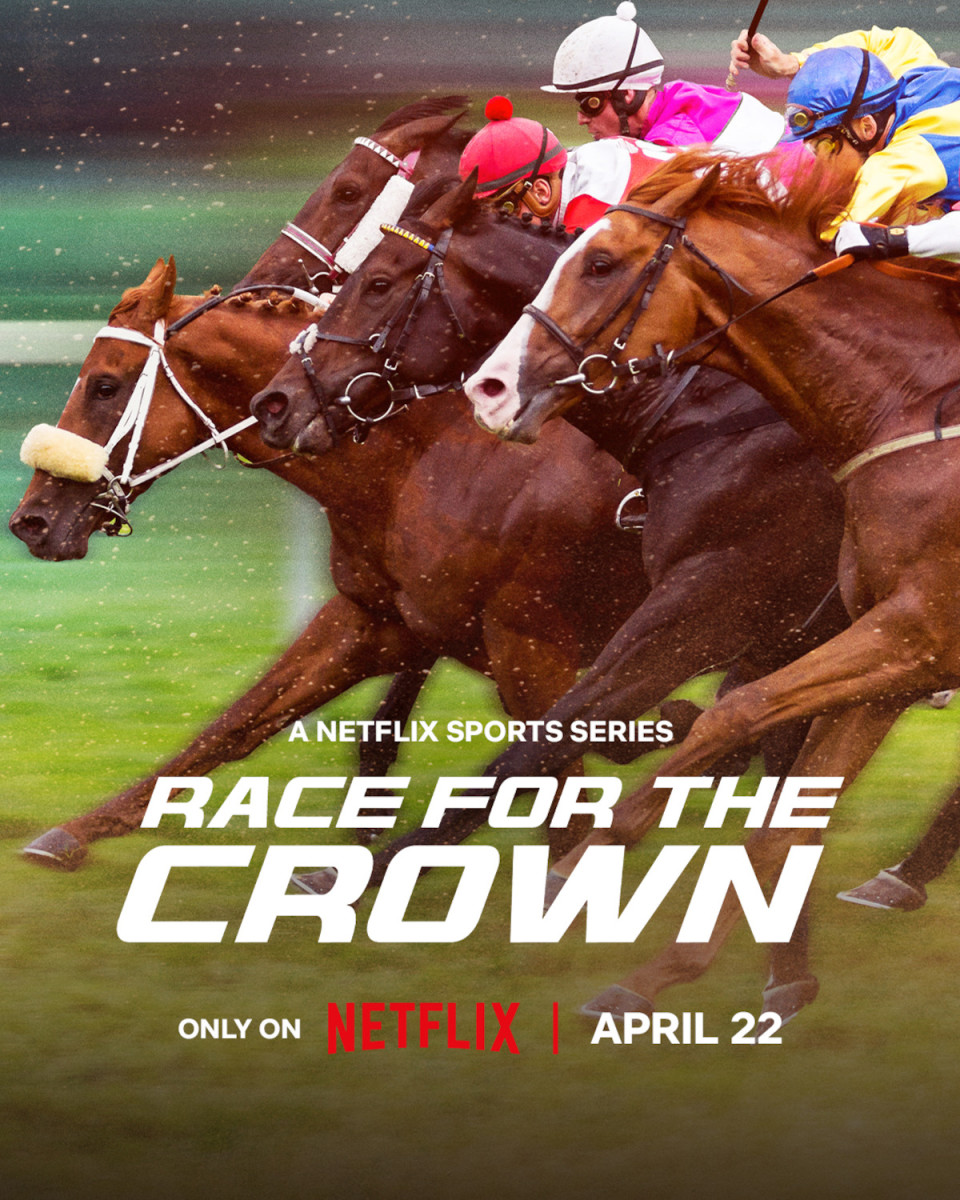 It has taken too long for horse racing to get a seat at the top table of sports documentary series. Finally, with the six-part Race For The Crown, Netflix has sought to bring the thrills, passion, highs and lows of the US Triple Crown right into the mix alongside other premier mainstream international sports events, writes Paul Alster.
Full Swing, a Netflix series that for two seasons followed the ups and downs of top level US golf, was one of a number of recent sport-based documentary series that proved hugely watchable. I was looking forward to more of the same in the horse racing equivalent that debuted on April 22.
The producers chose to focus on a number of characters, most notably the legendary British-based Frankie Dettori, who after thirty-five years at the top table of world racing had retired – only to announce soon after that he was unexpectedly moving to America to continue his racing odyssey.
Opening with Dettori riding the Cheveley Park Stud’s outstanding mare Inspiral to victory in the November 2023 Breeders’ Cup Filly & Mare Turf at Santa Anita, the first episode soon moved on to also focus on three leading US racehorse owners, all with ambitions to win the Triple Crown; the Kentucky Derby, Preakness Stakes and Belmont Stakes.
Obnoxious, vulgar and downright unpleasant at times, these three filthy-rich owners lead lifestyles far removed from the ordinary; private jets, champagne, luxury yachts, ostentatious sports cars and jewellery being their daily norm. Each had spent many millions of dollars trying to acquire the best possible three-year-old colt. To put it mildly, none of the three came over as particularly endearing and hardly gave a true perspective of the huge variety of people from all walks of life involved in racehorse ownership the world over.
Indeed, Mike Repole, a leading US racehorse owner and one of the multi-millionaire trio featured, showed his true colours in the closing moments of the final episode when telling the Netflix crew to “**** off and get out of my house!” The fact that the producers left this foul-mouthed tirade in the final cut is a probable indication of their opinion of Repole himself.
There was precious little real insight into the breeding or training of racehorses, and sadly not even a cursory nod to the efforts of stable staff and work riders, but trainers Kenny McPeek, Larry Demeritte, and Danny Gargan at least came over as decent people whose passion for the sport and love for their horses was plain to see. Jockeys Brian Hernandez and Katie Davies, in particular, also brought a more human down-to-earth element to the series, juggling their respective family life with their job as full-time elite athletes.
The race sequences, dawn exercise, slow motion starting stalls images, and a few moments of tranquillity with the horses were beautifully filmed in signature Netflix style. Leading British racing broadcaster Nick Luck’s informed insights added a much needed touch of class to a series that clearly set out to project a particular, but lop-sided image of the world of racing. It was most certainly not designed as a showcase for the sport of horse racing and the industry that supports it.
As for the great Dettori, the sequences with fellow US-based Italian jockeys Umberto Rispoli and Antonio Fresu were enjoyable, but this fly-on-the-wall effort to resurrect his career is tinged with a degree of sadness. Dettori recently declared bankruptcy after allegedly falling victim to a financial scammer, making the champagne lifestyle repeatedly featured in Race For The Crown somewhat ironic.
Paul Alster has broadcast and reported on the British racing industry for almost four decades as a commentator, journalist, presenter, betting correspondent, SP Returner, tipster and form analyst, among other things.