
Urgent changes required to secure long term future of British jump racing
One of the biggest highlights of any sporting autumn are the showcase fixtures at the home of National Hunt racing, Cheltenham. Starting with the first meeting of the campaign in October at the beautiful Cotswolds track, the season really takes off with the three-day ‘Paddy Power’ fixture in mid-November, but the meeting that concluded yesterday drew much criticism from many quarters, with the state of the ground being of particular concern, writes Paul Alster.
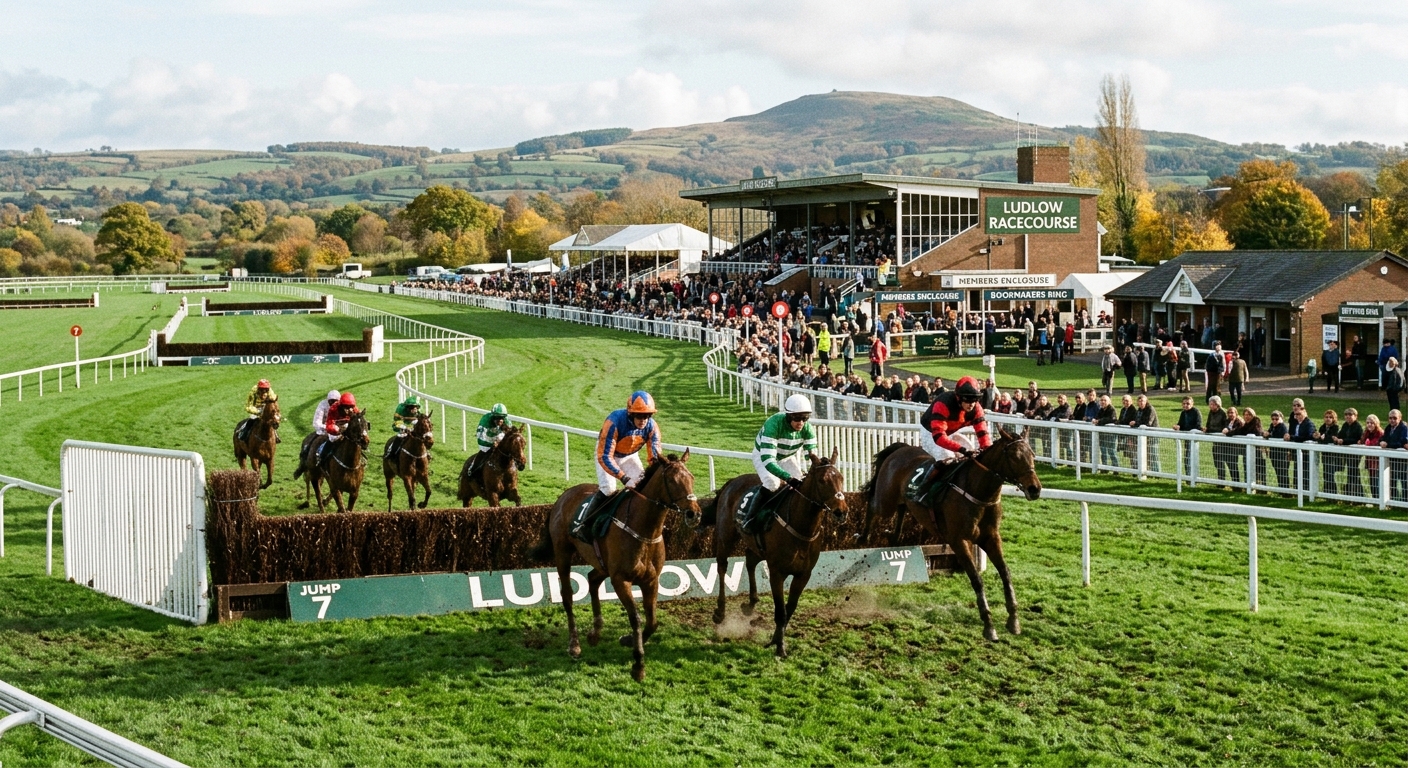
No one can blame the Cheltenham authorities for the exceptionally dry weather experienced throughout the summer and into the autumn that has caused havoc with the jumps fixture list. It has resulted in Ludlow (pictured below) cancelling all scheduled meetings this season, while Leicester, Wincanton, Exeter, Fakenham, Taunton, Warwick and even Kempton Park have had to abandon scheduled meetings as the ground was too dry for conditions to be safe for jump racing. Global warming is playing its part, as too is the El Nino phenomenon that has parched so many usually temperate areas of Europe.
There was a time, not so very long ago, when there was no summer jump racing in Britain as the ground was considered too risky for the traditionally bred National Hunt horses. Ireland, where there was always plenty more rain, raced on into the summer with their showcase Galway Festival running alongside Britain’s Glorious Goodwood in late-July/early August. A combination of the betting industry seeking to pad out the racing schedule to encourage greater turnover, allied to a different type of thoroughbred coming into the jumps game – many that had been bred for the Flat and quicker conditions – prompted the opening up of the summer racing schedule to jumps cards.
For some years things went on without too much worry, summer jumping allowing smaller yards to bid for a share of the prize money while many of the bigger jumps operations sent their winter jumps horses out to grass. In recent years though, a combination of falling number of horses-in-training and much drier weather has seen summer jumping become less competitive with three and four-runner races becoming standard – a big turn off for many punters. With racecourse entry prices, the cost of petrol, and often exorbitant food prices on-course, many racegoers have marched with their feet and chosen to stay home, triggering a vicious circle for many of the rural tracks; falling income, higher expenses, uncompetitive racing, and regular ground issues bringing some of the tracks to their knees. It is not long since Folkestone and Towcester closed their doors, while the on-off-on-off Chelmsford City saga drags on and on.
When even wealthy Cheltenham racecourse has to abandon meetings due to ground and drainage issues – as it did last season – and then met much criticism for the state of the ground at the showcase Cheltenham Festival meeting last March, you know that things are getting serious. That point is reinforced when one of the biggest critics of Cheltenham was none other than the winning-most trainer in Cheltenham history, Willie Mullins (pictured below), who made it clear how uneasy he was about the state of the track by withdrawing some of his superstar horses, such as Fact To File, from championship races.

Mullins said it at the end of last season and repeated it again last week after running only one horse over the three days of the November meeting – and that was in the bumper. The greatest jumps trainer of all-time reiterated that if the ground at Cheltenham doesn’t become more reliable, he will encourage his owners to look more to Aintree and Punchestown and not risk their horses at the Cheltenham Festival itself, for so long the undoubted Olympics of the jumps racing world.
Mullins’ criticisms were backed up by many industry professionals, including former star jockey Ruby Walsh, now a television pundit who launched a scathing attack on the poor state of the ground at Cheltenham last week that resulted in a massive 26 non runners on Saturday alone! Race times on the opening day of the fixture on Friday, clearly indicated that the official description of the ground as “Good, Good to Soft in places” was misleading, times suggesting the ground was closer to Good to Firm. Had conditions been advertised as Good to Firm, there would inevitably have been even fewer runners than was the case, but plenty of owners and trainers were left footing the bill for wasted journeys, while a number of horses slipped on the home turn raising renewed ground,concerns from many quarters.
Cheltenham clerk of the course Jon Pullin had failed to water to ensure the safest possible ground, seemingly anxious about testing conditions should the much wanted rain actually arrive ahead of racing. It didn’t, until late-morning on the third day, but would it have been such an issue had Cheltenham prepared Good to Soft, or Soft ground? After all, we’re talking about winter jumps racing, not Royal Ascot!
With extra affordability checks in the offing, as well as increased taxation of the betting industry, drastically changed weather patterns, and massive competition for the public’s leisure pound from so many industries, racing has to get its act together quickly – something far easier said than done as the many bodies representing different elements of the racing world have long been suspicious of each other and have very rarely acted as one when trouble has been on the horizon.
The potential removal of summer jumping has now to be seriously considered, as well as a better prize money funding model to ensure that more owners don’t leave a sport so many love, but increasingly can’t afford to participate in. Safe ground for jump racing absolutely has to be achieved by hook or by crook if the sport isn’t going to continue down a very greasy pole.
These are very worrying times for the whole racing industry.
Paul Alster has broadcast and reported on the British racing industry for four decades as a commentator, journalist, TV and radio presenter, betting correspondent, SP Returner, tipster and form analyst, among other things.